
Long-Term Kidney Protection Care
Diabetes and high blood pressure (hypertension) are two of the most common causes of chronic kidney disease (CKD). Over time, uncontrolled sugar and BP can damage the tiny filters of the kidney (nephrons), leading to protein leakage in urine, reduced kidney function, swelling, and eventually kidney failure. Early diagnosis and strict control of sugar and BP can slow kidney damage and prevent dialysis.
Early detection helps save kidney function
Protein urine control reduces progression
BP & sugar management prevents complications
Delays dialysis with proper kidney care plan
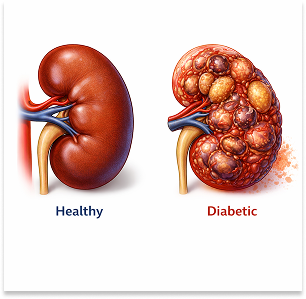
Kidney damage due to diabetes or hypertension may not cause symptoms in early stages. Regular kidney screening is important, especially if you have long-standing diabetes, uncontrolled BP, or protein in urine. Early treatment helps protect kidneys for years.
Protein leakage (microalbuminuria) is an early sign of kidney damage.
Fluid retention can cause swelling in feet, ankles, or face in kidney disease.
Increased creatinine levels indicate reduced kidney filtration function.
Long-term uncontrolled diabetes and BP can worsen kidney damage quickly.
Diagnosis includes blood tests, urine tests, and kidney imaging. Treatment focuses on controlling sugar and BP, reducing protein leakage, protecting kidney filters, and preventing complications like anemia, bone disease, and fluid overload.
Step 01
Creatinine, eGFR, and electrolytes are checked to evaluate kidney performance.
Step 02
Urine microalbumin or protein tests help detect early kidney damage.
Step 03
Medicines are optimized to maintain BP and sugar targets and protect kidneys.
Step 04
Diet advice, salt restriction, weight control, and regular follow-up slow progression.
With timely kidney care, many patients can prevent worsening of CKD and live a stable life without dialysis for years.
Slows kidney damage progression
Reduces protein loss in urine
Improves BP & sugar control safely
Delays dialysis and reduces complications
Reducing salt intake helps control BP and protects kidneys from further damage.
Regular sugar, BP, urine protein, and creatinine checks help prevent sudden worsening.
Avoid painkillers without advice, smoking, and dehydration to protect kidney health.
Early kidney damage can be controlled and slowed significantly with strict sugar and BP control. Advanced damage may not be reversible, but progression can be delayed.
Most patients should check urine protein and kidney function at least once a year, or more frequently if advised by the doctor.
